Chapter Overview
This chapter introduces the Earth system, the composition of the atmosphere, weather and climate, atmospheric observations, and the major layers of the atmosphere.



Farmingdale State College • Professor Richard Hoffman
This chapter introduces the Earth system, the composition of the atmosphere, weather and climate, atmospheric observations, and the major layers of the atmosphere.
Chapters 1 and 2
Test date: See the Fall 2026 course schedule
Read both textbook chapters along with the online class notes.
A system is a group of interacting parts that form a complex whole. In a closed system, energy may move in and out while matter does not. In an open system, both energy and matter can move into and out of the system.
Solar energy drives external processes in the atmosphere, hydrosphere and at Earth’s surface.
Internal heat powers processes that produce volcanoes, earthquakes and mountains.
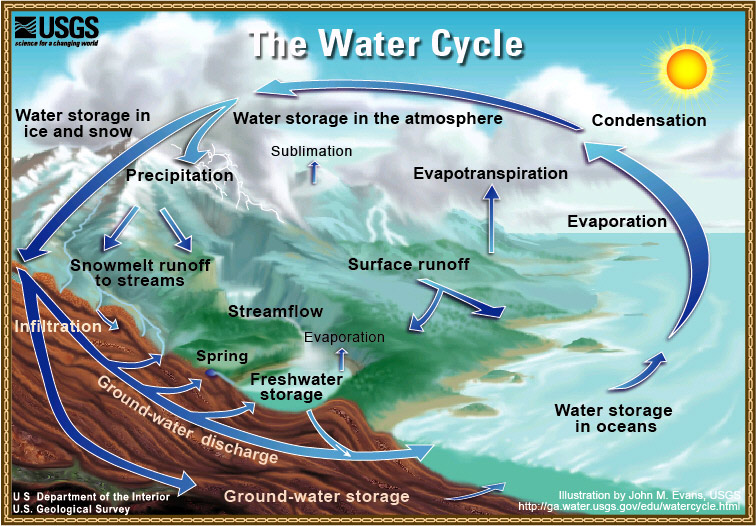
The hydrologic cycle is one of Earth’s many subsystems. Water continuously moves from the oceans to the atmosphere by evaporation, from the atmosphere to land by condensation and precipitation, and from land back to the sea through streamflow and groundwater.


Current Weather

Climate Almanac
| Location | Time | Weather | Temp. (°F) |
Dewpt. (°F) |
Hum. (%) |
Heat Index (°F) |
Wind (mph) |
Wind Gust (mph) |
Cloud Bases (100s ft) |
Vsby. (SM) |
Pres. (in) |
|---|
Monthly almanacs summarize daily climate data, averages, records, precipitation, snowfall, sunrise and sunset times.
Weather balloons carry radiosondes, lightweight instrument packages that transmit measurements of temperature, pressure and relative humidity. Airplanes, satellites, rockets and weather radar are also used to study the atmosphere.

Weather Balloon

Radiosonde
Using temperature as the basis, the atmosphere is divided into four major layers. The boundaries between them are called pauses.
The lowest layer and the “weather sphere.” Temperature usually decreases with height.
Contains the ozone layer. Temperature increases with height because ozone absorbs ultraviolet radiation.
Temperature decreases with height. The mesopause is the coldest region of the atmosphere.
Very thin air and temperatures that increase greatly with altitude. The ionosphere lies within this region.

NOAA Atmospheric Layers

Atmospheric Levels

Layer Structure
The average environmental lapse rate is about 6.5°C per kilometer, or roughly 3.5°F per 1,000 feet. It is not constant and must be measured regularly with radiosondes.
A temperature inversion occurs when temperature increases with height. In general, a larger temperature decrease with height indicates greater instability.
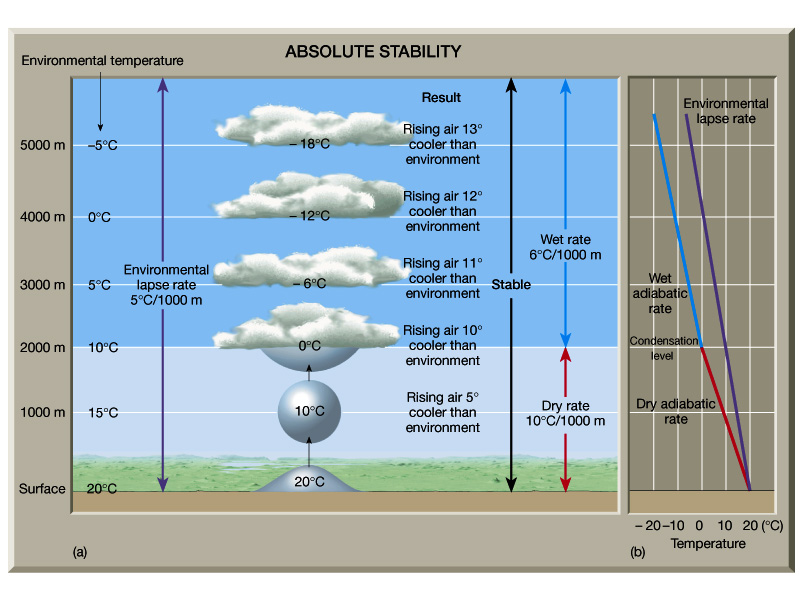
Absolutely Stable
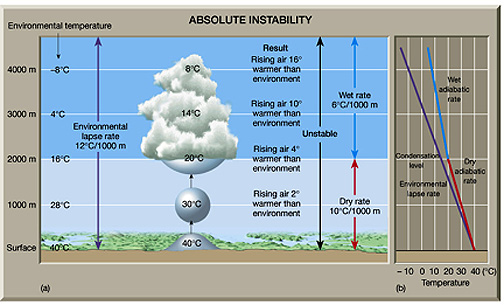
Absolutely Unstable
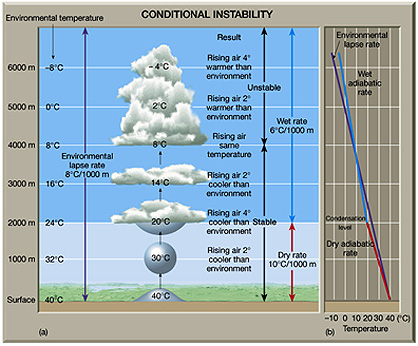
Conditionally Unstable
The ionosphere extends roughly from 80 to 400 kilometers above Earth and contains electrically charged particles. Its D, E and F regions affect radio signals and vary between day and night.
Auroras form when energetic particles from the Sun interact with atoms and molecules in Earth’s upper atmosphere near the magnetic poles.
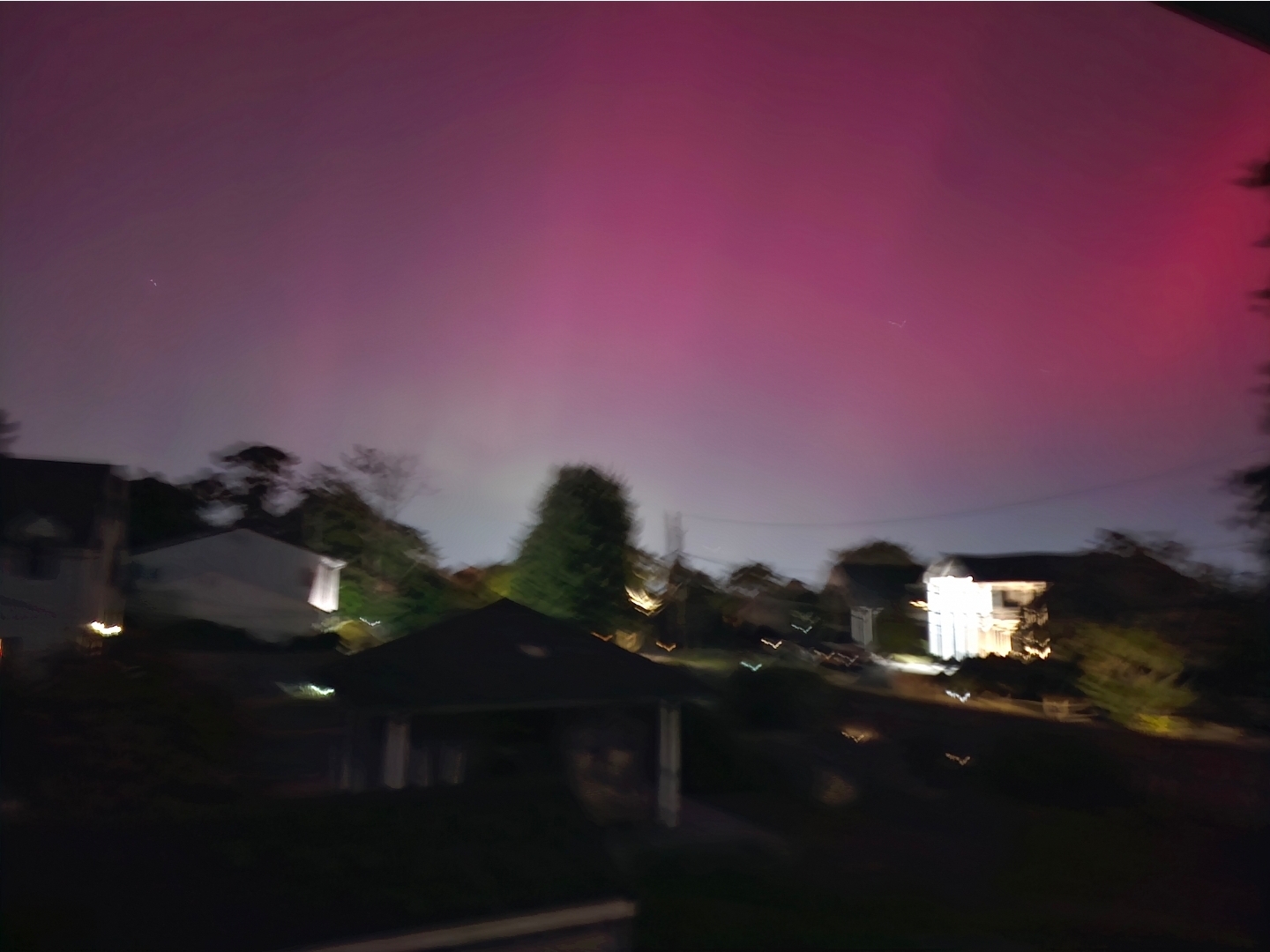
Aurora Borealis - October 10 2024 - Long Island

Red and Green Aurora

Aurora Australis
Test 1 covers Chapters 1 and 2. Be ready to explain: